
Kathmandu: The world's highest peak, Mount Everest, has once again become a garbage pile, and it is said that it will take years to clean it.
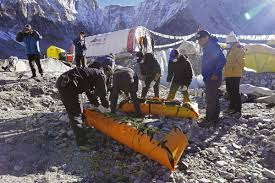
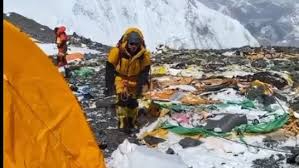
Yes.. Nepal has formulated a five-year cleanup action plan to deal with the growing problem of garbage on the world's highest mountain and other high Himalayan peaks. The Nepal government has brought this plan after criticism that Mount Everest is turning into a dumping ground.
The Ministry of Culture, Tourism and Civil Aviation of the Nepal government has announced a five-year plan and launched a cleanliness campaign to keep the Himalayas clean. The plan is said to determine the number of climbers and the duration of climbs based on the carrying capacity of the mountains.
Control on permits
Unlimited mountaineering permits will no longer be issued based on demand. Currently, there are complaints that the excessive number of permits issued on other mountains, including the highest peak, Sagarmatha, is causing problems for overall management.
To mitigate these risks, the government has announced a new action plan (2025/2030) that includes programs such as strict waste management, improved bale systems, increased use of technology, prioritizing human resource development, and strict waste disposal.
If waste from mountaineers and trekkers, such as feces, dead bodies, cans, bottles, plastics, tents, bags, and sacks, is not properly managed, it will have a negative impact on the environment of the Himalayan region. This is why the five-year plan was needed, the ministry said.
Everest Cleaning Project
In 2019, the Everest Cleanup Campaign was launched to tackle the growing waste problem on Mount Everest. The campaign was led by the Khumbu Pasang Lamu Rural Municipality in coordination with the Sagarmatha Pollution Control Committee (SPCC). But there were questions about how the money was spent, a lack of transparency, and the absence of a long-term plan. These issues led the government to design a policy-backed, long-term action plan.
The Nepali Army participated in the cleanup of both Mount Everest and Lhotse during this effort. During the 2019 campaign, the team collected 10,800 kilograms (about 10.8 tons) of waste, including biodegradable and non-biodegradable materials, and also recovered four human bodies from the mountain.
According to New Business Age, the Nepali Army collected a total of 119,056 kilograms, 12 human bodies, and four sets of human remains. Between 2000 and 2007, Noguchi and his team helped collect about 90 tons of waste from Everest. However, 25 years later, the mountain's litter problem has only gotten worse.
28 glaciers, source of over 6,000 rivers
Eight of the world's 14 mountains over 8,000 meters are in Nepal. Nepal has 28 glaciers, which are the main source of over 6,000 rivers and streams.
According to statistics, there are 5,358 lakes and 2,232 glaciers across Nepal. Nepal has 1,310 peaks over 6,000 meters. However, as the number of climbers increases, so do the challenges to the local environment, biodiversity, pollution and waste emissions.
According to the ministry, if temperatures continue to rise at the current rate, there is a risk of 36 percent of the glaciers melting within this century and 64 percent if carbon emissions remain at current levels.
The ministry says that in the early stages of mountaineering, mountaineers did not pay enough attention to waste management, which led to the accumulation of waste in the Himalayas. Due to the extreme cold, this waste remained there for years and even today, mountaineers have to climb the mountain by stepping on the garbage.